Repairs that almost always trigger calibration
Bumper or fender work, mirror replacement, grille repair, suspension or alignment, structural work — all of these disturb the sensors and cameras.
After your car was hit — even a minor fender-bender — the cameras, radar, and sensors that power lane assist, automatic braking, and blind spot warning may need to be recalibrated before it is safe to drive away.
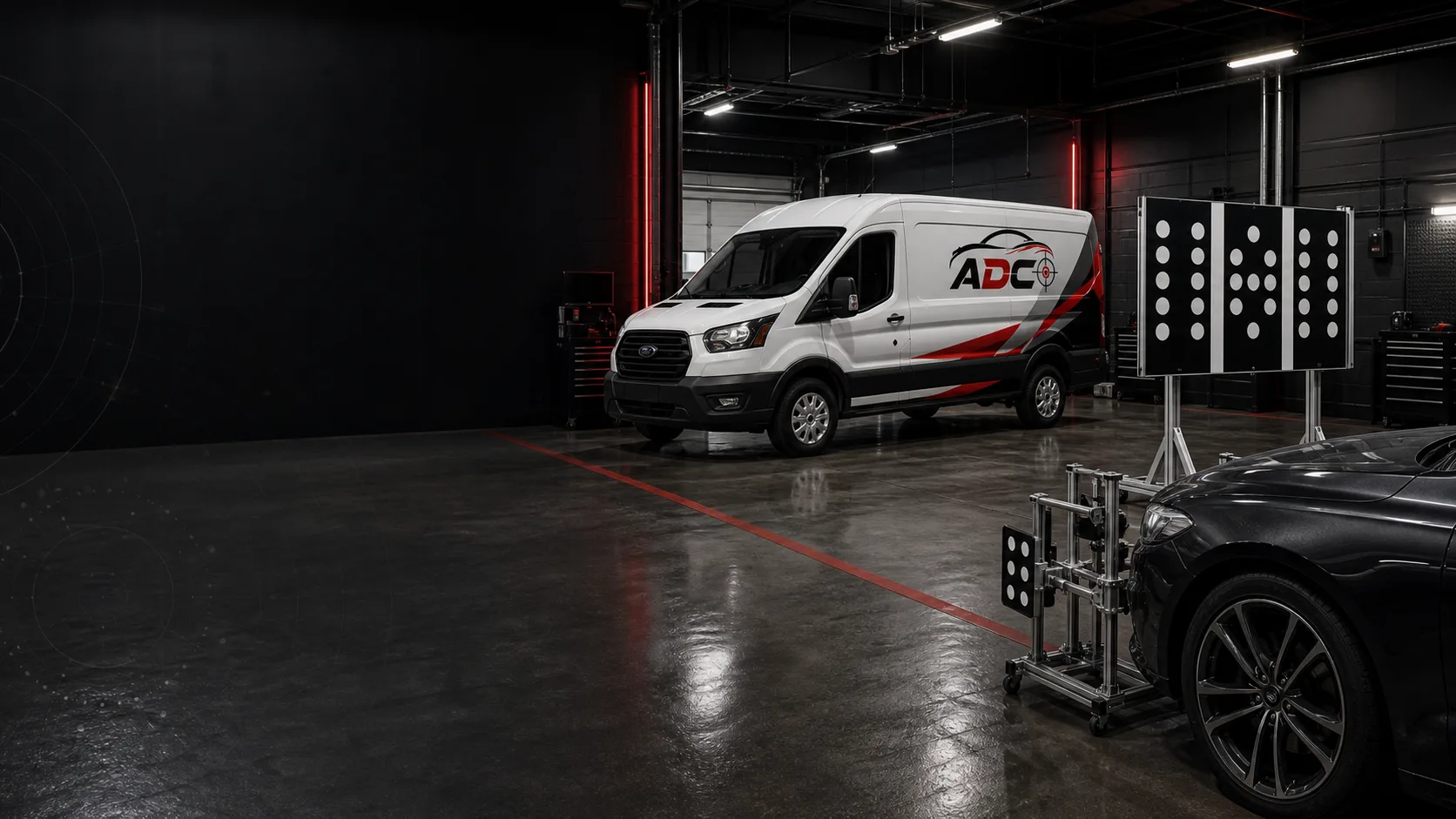
Bumper or fender work, mirror replacement, grille repair, suspension or alignment, structural work — all of these disturb the sensors and cameras.
Lane assist, automatic braking, and adaptive cruise depend on cameras and radar seeing the road from exactly the right angle. After a repair, that angle is usually off.
Calibration is part of the repair, and we document it that way — so your carrier sees why it was needed and what was done.
Your car's safety systems are sensitive — they have to be, to work at highway speeds. A bumper that sits even a quarter-inch off, a mirror replaced without recalibrating the camera inside it, a suspension that is now slightly different ride height — any of these can throw the cameras and radar out of spec. The car looks fine. The safety systems are not.
Sometimes the calibration cannot complete — a fault code is stored, a sensor was damaged in the collision, a mounting bracket is bent. Most shops would send you to the dealer for diagnosis. We do it ourselves, find the actual cause, and either fix it or tell you exactly what your body shop needs to do next.
When you pick up your car, you get a final scan report showing every system is working, the calibration confirmation, and the manufacturer's procedure documentation. Your body shop gets the same. Your insurance gets what they need to close the claim.
Send your VIN and a quick note on what was repaired. We will confirm what calibration is needed and schedule you in.